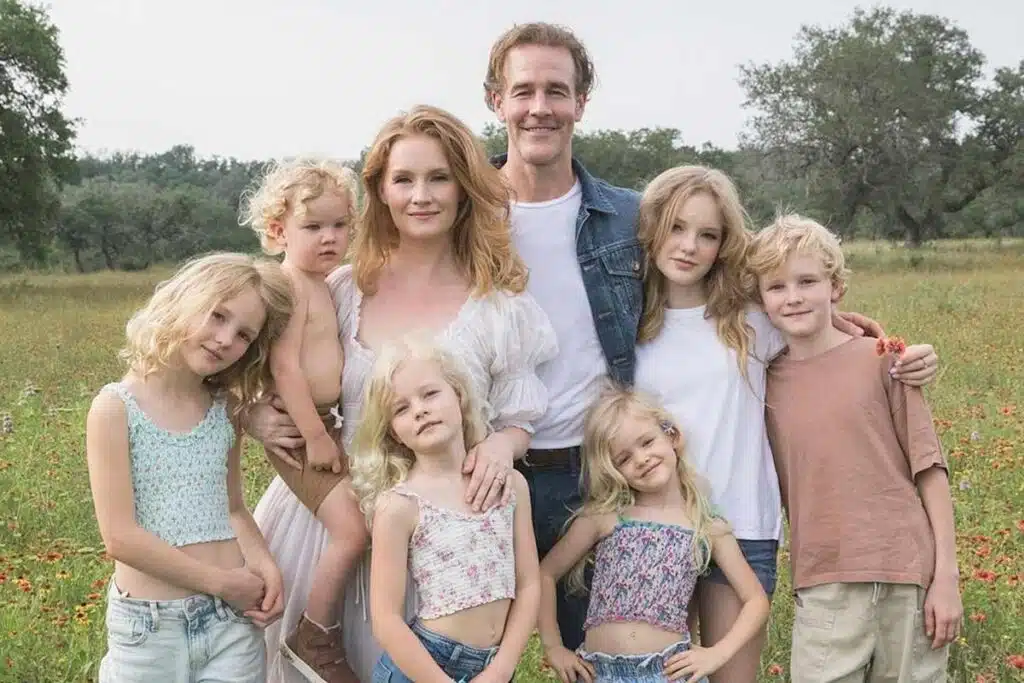
News that actor James Van Der Beek has died from cancer at age 48, survived by his wife and six children, is a heartbreaking reminder of how deeply loss reshapes a family’s world. The loss of a loved one is always painful, but when that person is not only a partner and parent, but also a family’s primary provider, the emotional, practical, and financial impacts ripple through every part of life.
The Emotional Toll on Children and Spouses
For children, especially young ones, the death of a parent can be one of the most destabilizing experiences of their lives. Even when illness is long-term and a family has time to prepare, grief can manifest deep sadness, confusion, and anxiety. Children do not grieve in the same linear or verbal ways adults do. Their grief may appear in waves – sadness one moment, playfulness the next. Younger children may not fully grasp the permanence of death. Adolescents may struggle with anger, fear, or questions about fairness and safety. When a child realizes, “I’m not the only one,” the burden lightens. Isolation softens. Shame dissolves. Hope begins to grow.
For a spouse, losing a life partner touches every corner of existence. The grieving partner may face profound loneliness, the absence of daily companionship, and the emotional challenge of parenting while grieving. At the very moment they need support; they are also the primary source of stability for their children.
When the Provider Is Gone: A Financial and Practical Shift
The death of a primary provider brings not only heartbreak but also uncertainty about day-to-day stability. Medical bills, lost income, and future expenses—like school, housing, and everyday living costs—quickly become urgent concerns. In the case of James Van Der Beek’s family, friends and fans quickly mobilized a GoFundMe that raised significant support in the first 24 hours, highlighting both the generosity of community and the real financial stress the family now faces…alone.
Families suddenly find themselves making tough decisions, from budgeting for essentials to navigating insurance, savings, and potential career changes for the surviving spouse. While fundraisers and immediate financial support are meaningful and necessary, the long-term impact of financial strain can extend for years if not indefinitely.
Beyond Condolences: The Need for Ongoing Bereavement Support
Community support after a loss often begins with an outpour of condolences, flowers, food, messages, social media tributes, and fundraisers – all of which are deeply meaningful. But sustained care makes the greatest difference because grief doesn’t end when the flowers fade.
True healing requires consistent, sustained emotional and social support – the kind that walks with a family long after public attention has moved on, celebrity or not. Community-based psychosocial support provides children and their caregivers with safe spaces to express feelings, normalize their experience, foster social connection, and feel less alone.
Research consistently shows that when surviving parents receive meaningful emotional and practical support, they are better able to care for and guide their children through grief. Children are deeply attuned to the emotional state of their surviving parent. When that caregiver feels supported rather than overwhelmed, children experience emotional stability.
For the past 30 years, Red Door Community has provided free cancer support, including bereavement programming for families grieving the loss of a loved one to cancer. Through support groups, wellness workshops, practical assistance, and parental guidance, families receive not just sympathy but continuous care. This type of consistent community support becomes the foundation that helps rebuild a family’s sense of connection. Families learn that while death changes life forever, they do not have to navigate that change alone.
Red Door Community ensures that families are not simply surviving loss but learning how to live alongside it.
What blog posts would you like to see?
We’d love for you to be a part of this. Send us your questions, your stories, and your ideas. Help us shape the conversations that matter most to you. Let’s stay connected. Let’s grow this community—together.